Why Energy Independence Changes the Power Dynamic
When I installed my first solar system in 2023, my thinking was straightforwardly economic. Load shedding was costing South African households real money in lost productivity, spoiled food, damaged electronics, and the running costs of generators and UPS systems. Solar was the rational response to an irrational utility situation, and I approached it the way I would approach any infrastructure purchase — sizing for the problem, budgeting for the solution, evaluating the payback period.
I did not anticipate that going fully off-grid would change something considerably less tangible than my electricity bill. But it did. This article is an attempt to articulate what that change is, because it matters for how people think about solar investment — and because it is almost never discussed in the financial and technical conversations that dominate South African solar content.
The Vulnerability of Dependence
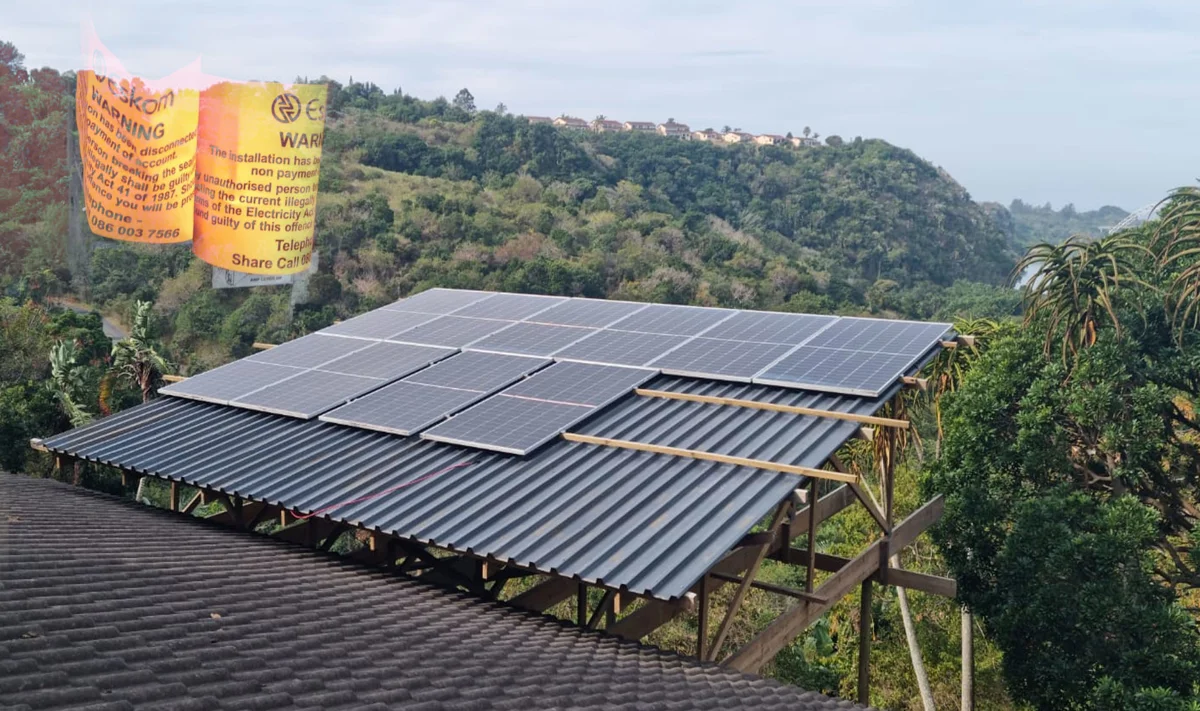
It is easy to underestimate how much of modern domestic life runs on electricity until a dispute with your utility puts that supply in jeopardy. Refrigeration, internet, communication, lighting, security systems, medical equipment, water pressure if you are on a borehole pump — the list of functions that become unavailable or degraded during disconnection is long enough to make a household genuinely vulnerable in ways that go well beyond inconvenience. During the months of my Eskom billing dispute, that vulnerability was not abstract. It was the background condition against which every communication with the utility happened.
What I noticed, living in that situation, is that dependence on a supply you do not control changes how you engage with the institution that controls it. You cannot walk away from a negotiation you depend on. You cannot take a firm position in a dispute when the other party has the ability to disconnect your refrigerator. The coercive power of supply control is subtle but real, and it operates whether or not the institution exercising it intends it to. Eskom disconnecting my supply during an unresolved billing dispute was not necessarily a deliberate exercise of leverage. But it functioned as one, regardless of intent.
What Changed When the Meter Read Zero
Since going fully off-grid on 13 June 2026, my SolarmanPV telemetry has recorded exactly 0.00 watts of grid purchasing in every single 5-minute reading across eight consecutive days. That figure is not, at its most important level, about electricity. It is about the nature of the relationship between my household and a utility I am still in dispute with.
The dispute did not resolve when I went off-grid. The administrative process continues. But its practical significance changed completely. Before the transition, the dispute carried immediate material stakes — ongoing supply uncertainty, the possibility of further disconnection, the daily cost of operating without stable power. After the transition, it became a financial and administrative matter. Still worth pursuing. No longer existential. The difference in how that feels, and how it affects your capacity to engage with it calmly and clearly, is substantial.
The Difference Between Backup and Independence
There is a meaningful psychological distinction between having backup power and having energy independence, even when the hardware involved is similar. A backup system changes how you experience outages — you are comfortable during load shedding, your refrigerator stays cold, your devices stay charged. But a backup system still positions the grid as the primary source and solar as the supplement. When the grid is working, you use it. When it fails, you fall back on your own system. Your fundamental orientation is still toward the utility.
Off-grid operation inverts that relationship entirely. The sun and the battery are primary. The grid is something that used to exist and theoretically could again. That inversion is not just semantic — it changes how you think about your energy situation at an almost instinctive level. You stop watching load shedding schedules. You stop caring about Eskom tariff announcements in the immediate, personal way you once did. You become interested in them the way you might be interested in petrol prices if you drove an electric vehicle — aware of them, not insulated from their broader economic effects, but no longer exposed to them personally.
Energy Awareness as a Byproduct of Independence
One effect of off-grid operation that I did not anticipate is how much more aware of energy you become — not in an anxious way, but in a genuinely informed way. When the battery is your only buffer between production and consumption, you pay attention to cloud cover in the morning. You notice when the production graph climbs after 09:00. You run the kettle during the production peak rather than at midnight from stored battery power, not because you are rationing, but because it is simply more elegant to use energy when it is being generated than to store it and retrieve it later at a slight efficiency cost.
This awareness develops quickly and becomes habitual within a week or two. It is not deprivation. The household runs normally — food is refrigerated, devices are charged, lights work, the internet functions. What changes is a background awareness of the energy system that grid-connected households simply never develop, because they never need to. That awareness feels, from the inside, more like competence than constraint.
The Limits of Independence
Off-grid operation replaces one form of dependency with several others, and intellectual honesty requires acknowledging that. You depend on the weather — on sufficient solar production to recharge the battery each day. You depend on equipment reliability — on the inverter, the battery, the panels, and the monitoring system all functioning correctly. You depend on your own planning — on understanding your consumption patterns well enough to anticipate when the system needs managing. And you depend on your own financial capacity to maintain and eventually replace equipment as it ages.
These dependencies are different in character from utility dependence — they are more distributed, more within your own control, and less subject to institutional decision-making — but they are real. An extended week of heavy cloud cover in winter will test a system that has not been sized with sufficient margin. An inverter fault is more personally disruptive off-grid than on it. The self-reliance that comes with independence also comes with the full weight of responsibility for what happens when things go wrong.
This is not an argument against independence. It is an argument for being clear-eyed about what you are trading one set of risks for another set, with different characteristics and different mitigation strategies. For most South African households who have lived through the load shedding years and watched Eskom tariffs climb consistently, the trade looks favourable. But it is a trade, not an escape.
Why This Matters Beyond the Individual Household
The broader South African context gives this personal calculation a different dimension. The country's energy insecurity over the past decade has not been a temporary technical problem — it reflects a structural challenge in the energy supply model that will take years to resolve. Against that backdrop, household energy independence is not merely a financial optimisation. It is a form of infrastructure diversification that reduces the aggregate demand placed on a struggling centralized system while simultaneously removing individual households from the consequences of that system's failures.
This does not make solar a civic duty, and it should not be presented as one. The decision is personal and economic. But for households in a position to make the investment, the convergence of falling solar costs, improving battery economics, rising tariffs, and continuing supply unreliability is making the case in financial terms that was once primarily made in resilience terms. The two arguments are increasingly pointing in the same direction.
What I Would Tell Myself in 2023
I installed solar in 2023 to solve a load shedding problem. It did that. What I did not understand at the time was that solving the load shedding problem was a side effect of a larger change — moving from a position of energy dependence to one of energy agency. The financial case for solar is real and worth calculating carefully. The full cost of my system is documented honestly, including the costs that ROI calculators ignore, and the payback period is not short. But the financial calculation does not capture everything that changed when the grid power purchasing column in my telemetry went to zero and stayed there.
Energy independence is not simply about keeping the lights on. Sometimes it is about changing who controls whether the lights stay on. That distinction is worth understanding before you invest, because it changes what you are actually buying.
For the full story of how this off-grid transition came about, see How an Eskom Billing Dispute Forced Me Off-Grid. For eight days of real performance data from the system, see My First Week Completely Off-Grid.