What It Really Cost Me to Go Off-Grid in South Africa
One of the most persistent myths about residential solar is that going off-grid means buying an inverter, a battery, and some panels. Add those three up, divide by your monthly electricity bill, and you have your payback period. Simple.
It is not simple. After transitioning my home completely off-grid in South Africa following an Eskom disconnection during an unresolved billing dispute, I can tell you that the real cost of energy independence is substantially higher than any online calculator will show you — and that the gap between the quoted figure and the actual figure is almost entirely explained by costs that are systematically excluded from most solar ROI discussions.
This article documents every rand spent building and expanding my off-grid-capable hybrid solar system over three years, under real South African conditions, on a forested property with severe shading constraints and no perfect-roof assumptions. The numbers are what I actually paid. Not estimates. Not averages. Not what someone in Sandton paid for a standard suburban installation.
The Original System (2023): Backup Power, Not Independence
My original goal was not full energy independence. Like most South Africans who installed solar during the height of load shedding, I wanted backup power, reduced downtime, and some protection against grid instability. The 2023 installation reflected that: it was a hybrid system designed to supplement the grid, not replace it.
At this stage the system worked well as intended. The Deye inverter handled hybrid operation reliably, switching between grid and battery without drama. The JA Solar panels performed consistently despite the shading challenges that would later force significant infrastructure changes. The Volta battery provided enough overnight autonomy to see through most load shedding slots. What it could not do — and was never designed to do — was sustain the household without any grid connection at all.
The Hidden Infrastructure Costs: Where the Real Money Goes
This is the section that online solar calculators almost universally omit, and it is where the real-world cost of a South African solar installation begins to diverge dramatically from the theoretical one.
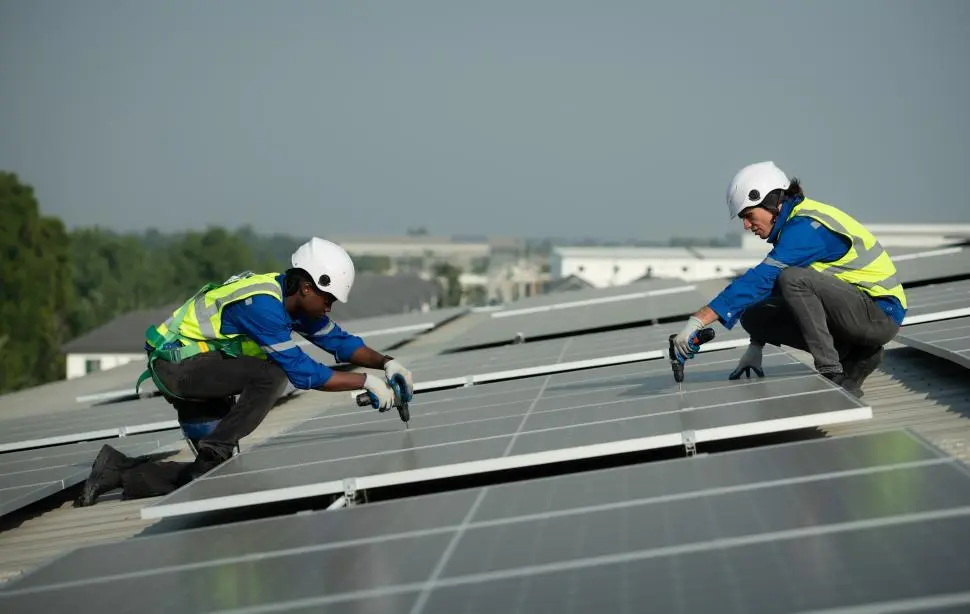
My property is heavily forested. That is not an abstract problem — in winter, when the sun angle in KZN drops significantly, trees that are perfectly manageable in summer become substantial obstacles to meaningful solar production. Simply bolting panels to an existing roof was not an option that would generate sufficient output. I had to build dedicated mounting infrastructure, raise the panels above the treeline, and reduce the vegetation itself.
| Infrastructure Cost |
Amount |
| Pergola Construction |
R7,500 |
| Pergola Extension & Elevated Roof Structure |
R25,000 |
| Arborist Tree Trimming |
R3,000 |
| Infrastructure Total |
R35,500 |
The arborist work is not a once-off cost. Trees grow back. This is a recurring maintenance expense that needs to be factored into any long-term solar ROI calculation on a forested property. The structural work, however, proved to be one of the most valuable investments in the entire project — raising the panels meaningfully above the surrounding vegetation directly improved winter production in a way that no amount of additional panels at ground level could have achieved.
Expanding the Array
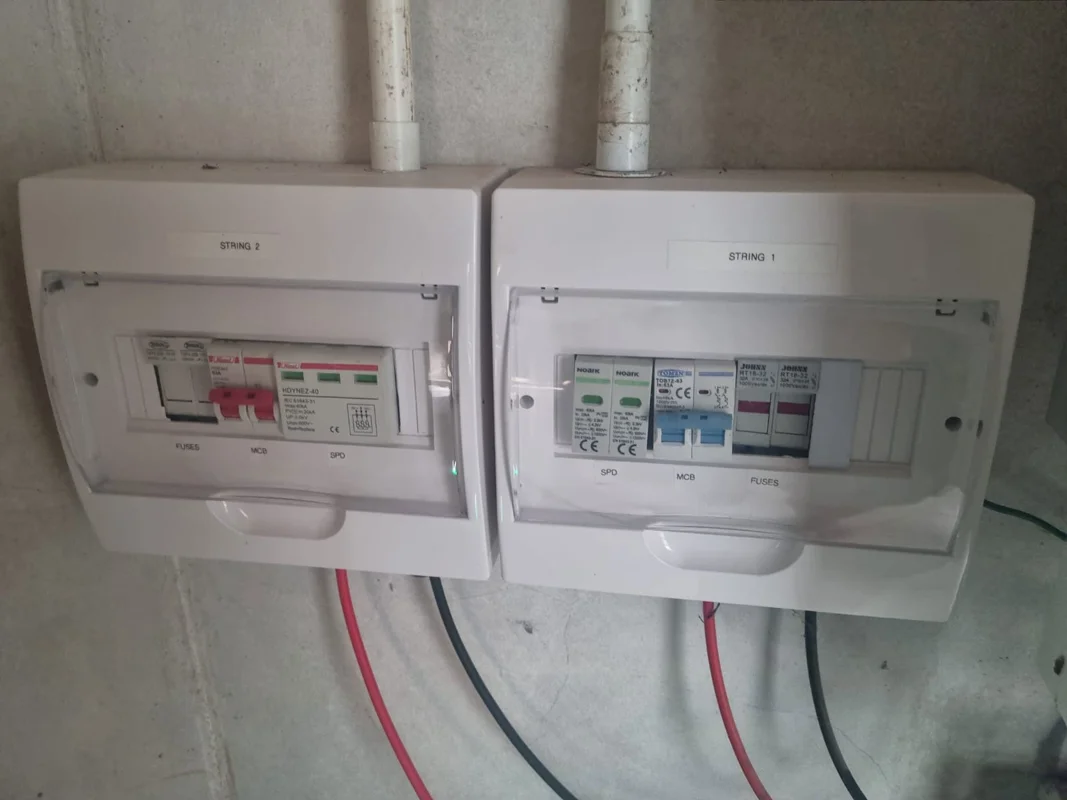
As the system's role evolved from backup to primary power source, I added a second string of panels. These were mounted at a greater height than the original array to further reduce morning shading losses from the vegetation that remained after tree trimming.
| Component |
Cost |
| 4× JA Solar 600W Panels |
R5,000 |
| Cabling, Combiner Boxes & Protection |
R2,600 |
| Labour |
R1,025 |
| Expansion Total |
R8,625 |
The second string made a measurable difference to daytime recovery speed. The real-world impact of this is visible in the SolarmanPV telemetry: on good winter days, the system now consistently peaks between 2,500W and 3,800W and has the battery back to 85%+ SoC by mid-afternoon, leaving substantial overnight reserve.
The Battery Upgrade Nobody Plans For
The most expensive unplanned cost in this entire project was not a component failure. It was a compatibility problem — the kind of problem that almost no solar salesperson will warn you about at the time of purchase.
My original Volta 5kWh battery could not be expanded because the manufacturer had changed the BMS communication interface between production runs. The version I owned could not communicate with the newer modules. Adding capacity was not a matter of buying another unit and plugging it in — it required replacing the entire battery ecosystem.
This is a fundamental risk in the South African solar market that deserves far more attention than it receives. Battery brands make changes to BMS protocols, discontinue product lines, or exit the market entirely. When that happens, you are not expanding a system — you are replacing it. The money spent on the original battery is sunk, and the upgrade cost is the full price of the replacement, not the delta between old and new capacity. I ultimately replaced the Volta setup with a Dyness PowerBrick Plus — a 16kWh unit that more than tripled my usable storage and made fully off-grid operation realistic for the first time.
| Battery Upgrade Cost |
Amount |
| Dyness PowerBrick Plus 16kWh |
R30,900 |
| Collection & Transport |
R700 |
| Installation Labour |
R1,025 |
| Trunking & Miscellaneous Materials |
R70 |
| Battery Upgrade Total |
R32,695 |
The Complete Cost Picture
Adding everything up across three years of incremental investment, this is what the system has actually cost to reach its current off-grid-capable state:
| Phase |
Cost |
| Original System — Inverter, Battery, Panels & Installation |
R64,500 |
| Shading Mitigation & Infrastructure |
R35,500 |
| Array Expansion — Panels, Cabling & Labour |
R8,625 |
| Battery Upgrade — Dyness 16kWh, Transport & Labour |
R32,695 |
| Total Invested to Date |
~R141,320 |
That figure represents three years of staged investment. It does not include the Eskom account payments made during the years of grid-tied operation, any recurring arborist costs, or the planned future upgrades described below.
What Still Needs to Be Done: Planned Future Costs
The system is functional and fully off-grid capable, but it is not finished. My current upgrade roadmap looks like this:
| Planned Upgrade |
Estimated Cost |
| Proper Solar Rails (replacing temporary mounting) |
R5,000 |
| 3kW Hybrid Inverter (generator integration) |
R6,000 |
| Additional Solar Panels |
R5,000 |
| Additional Wiring & Protection |
R2,600 |
| Labour |
R1,025 |
| Planned Future Investment |
~R19,625 |
The generator integration is the priority. The telemetry data from the first eight days off-grid shows that on heavily overcast winter days, peak production can drop as low as 1,158W — well below what is needed to sustain the household and recharge the battery simultaneously. A generator input gives the system a fallback for extended bad-weather periods without requiring a significantly larger panel array that would only be fully utilised on a handful of peak days per year.
What Solar Cost Calculators Don't Tell You
Most online solar ROI calculators operate on a set of assumptions that are perfectly reasonable for a standard suburban installation — an open, unshaded tiled roof, panels facing north at the optimal angle, no structural complications, a single purchase event, and no future expansion costs. For a large proportion of South African homeowners, those assumptions are broadly correct, and the calculators produce useful estimates.
For everyone else, the gap between the calculator output and the real cost can be substantial. Structural modifications, roof reinforcement, elevated mounting structures, cable routing across significant distances, combiner boxes, additional protection equipment, transport costs for heavy batteries, arborist work, and the replacement costs of incompatible older equipment are all regularly excluded from headline solar cost figures — yet they represent real money that leaves your bank account as surely as the inverter does.
The other thing calculators rarely model is incremental build cost. A system that is purchased in stages over three years will almost certainly cost more in aggregate than the same system specified and purchased at once, because each stage carries its own installation and labour overhead. If full energy independence is your eventual goal, planning for that capacity from the outset — even if you install in phases — will almost always be more cost-effective than the approach I took.
Was It Worth It? What the Data Says
Since going fully off-grid on 13 June 2026 — the day of disconnection — eight days of continuous SolarmanPV telemetry show exactly one figure for grid power purchased: 0.00 watts. In every single 5-minute reading, across eight consecutive days of South African winter operation, not a watt has been purchased from the grid. The battery has maintained a minimum overnight SoC of 22% even after the lowest-production days, and on good winter days the system peaks between 2,500W and 3,800W and reaches 85%+ charge by early afternoon.
Financial ROI in the traditional sense is genuinely difficult to calculate in my situation, because the circumstances that accelerated the off-grid transition — the billing dispute, the disconnection, the BMS compatibility failure that forced a full battery replacement — are not costs that appear in a standard solar payback model. What I can say is that the system is now delivering something that no electricity bill can: operational certainty. The question of what Eskom charges, what tariffs do next year, or whether a billing dispute ever gets resolved has become administratively interesting rather than practically urgent.
Whether that is worth R141,320 depends entirely on what you are buying it for. If the primary metric is kilowatt-hours saved at the current Eskom tariff, the payback period is long. If the metric includes resilience, independence from institutional dysfunction, and the removal of energy insecurity as a daily variable — it looks different. Both calculations are honest. You should do both before committing.
Final Thoughts
Going off-grid in South Africa is not a product purchase. It is an infrastructure project with a multi-year timeline, compounding costs, and technical decisions made early that have significant financial consequences later. The headline inverter-plus-panels-plus-battery figure is the beginning of the conversation, not the end of it.
Budget for the structural work. Research battery ecosystem compatibility before committing to a brand. Plan your full eventual capacity from the start, even if you build to it in stages. And read the fine print on anything that comes with a BMS — because when that interface changes, the sunk cost comes with it.
If you are planning a similar transition and want to find a qualified installer who will give you an honest assessment of your specific site constraints, visit our Solar Installer Directory — all listings include verified contact details and service areas across South Africa.
All costs documented in this article reflect actual expenditure on a specific residential installation in KwaZulu-Natal. Individual costs will vary based on property type, location, installer, and system specifications. This article is for informational purposes only and does not constitute financial or electrical engineering advice. Solar installations must comply with SANS 10142 and be carried out by a registered electrician.