Eight Days Off-Grid: How the Transition Has Affected Us in the Short Term
Every other article in this series has been about the system — the hardware, the costs, the data, the decisions. This one is about the people living inside it. After eight days of complete off-grid operation, I wanted to document not just what the SolarmanPV telemetry shows, but what the experience has actually felt like — the emotions, the surprises, the frustrations, the moments that shifted something, and the things I wish I had done sooner.
Consider this the human side of the data.
The First 24 Hours: Anger, Confusion, and an Unexpected Feeling of Readiness
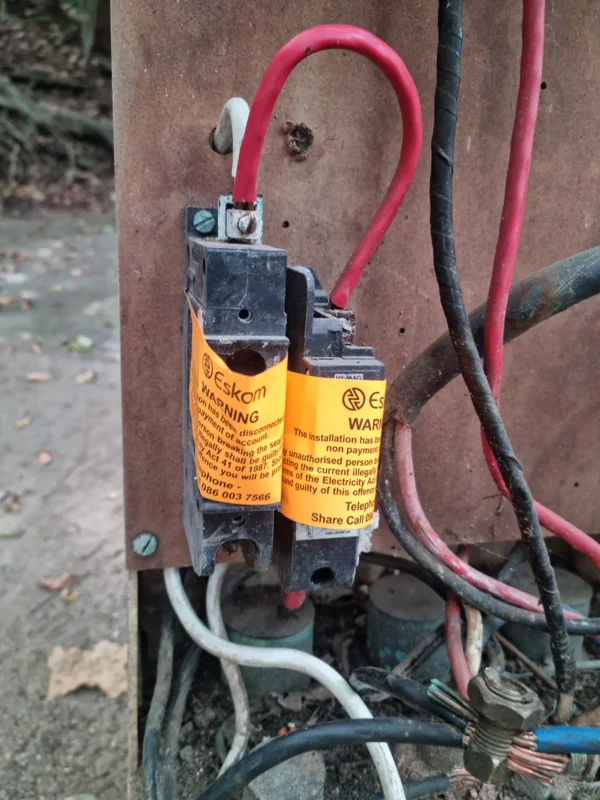
When Eskom disconnected our supply on 29 May 2026, the immediate emotion was not fear. It was anger. Anger at having spent months communicating, documenting, escalating, and attempting in good faith to resolve a billing dispute — only to have the supply cut while substantive issues remained unresolved. And alongside the anger, confusion. Not about what had happened technically, but about how an institution of this size could operate this way toward a customer who had consistently stated their willingness to pay once the account was properly reconciled.
But underneath both of those emotions was something I had not fully anticipated: relief that I had already started planning and saving for a larger battery. The original 5kWh Volta setup was never going to sustain the household indefinitely. I knew that. The disconnection accelerated a battery upgrade that was already on the roadmap, and the fact that I had been thinking about it — that I was not starting from zero — changed the feel of those first hours considerably. The crisis had arrived, but the preparation had too.
Day One: The Installation Fault Nobody Plans For
The new Dyness PowerBrick Plus battery was installed on the first day. By that evening, the system appeared to be operating normally. It was not. The installer had used the incorrect communications cable when connecting the battery to the inverter, which meant the system was not reading the battery's true state of charge. What the inverter believed about the battery and what was actually happening inside it were two different things.
Overnight, the battery drained to zero. Not to the 20% protection floor that a correctly configured system maintains. To zero. We woke the following morning with no power at all — no lights, no router, nothing. And because the battery was flat, there was nothing to do except wait. Wait for the sun to rise high enough to generate sufficient solar power to wake the inverter, at which point the fault could be identified, the correct cable sourced, and the system properly configured.
That morning was the single hardest moment of the transition. Not because the problem was ultimately serious — it was a cable, identified and fixed the same day — but because it happened on day one, before we had established any confidence in the system's reliability, and because there is a particular helplessness in sitting in a dark house waiting for the sun to solve your problem. My partner handled it with considerably more composure than I might have managed in the reverse situation. Her support throughout this transition has been one of the things that made it workable.
The lesson, which I would pass on to anyone installing a new battery: before the installer leaves, confirm that the communications cable is correct and that the inverter is reading the battery SoC accurately. Run a discharge cycle while the installer is still on site if you can. A cable fault is trivial to fix when the electrician is standing in front of you. It is considerably more stressful at midnight when the battery is at 3% and falling.
The First Morning Waking Up Truly Off-Grid
After the installation fault was resolved and the system was properly configured, the transition settled. But the moment that tested my confidence most was not the technical fault on day one. It was the following morning — waking up for the first time knowing that there was genuinely no grid connection at all. Not a disrupted one. Not one that could be restored with a phone call. Simply absent, by design, permanently for the foreseeable future.
The system was working correctly. The battery SoC was where it should be. The telemetry was clean. Intellectually I knew this. But there is a difference between knowing a system works and having lived with that knowledge long enough to trust it instinctively. That first proper morning was where the gap between knowledge and trust was most visible. I checked SolarmanPV before I made coffee. I checked it again an hour later. And again at midday. And again in the evening. Three weeks in I still check it morning, midday, and evening — but the checking has shifted from anxiety to interest. That shift happened gradually, confirmed by the data accumulating day by day.
The Monkey on the Transformer
On day three, a monkey jumped onto the transformer servicing our road and caused it to malfunction. Every house on the road lost power. Except ours — and one neighbour who also has solar.
I want to be precise about what that moment felt like, because it is genuinely difficult to describe without sounding callous toward the neighbours who suddenly had no electricity. The feeling was not smugness. It was something closer to stillness. In the past, a transformer fault on our road would have meant phone calls, frustration, the familiar cycle of reporting the problem, waiting, following up, waiting more, and eventually either Eskom resolving it or someone in the road with the right contacts managing to escalate it. I would have been involved in that process, almost certainly, because that is what you do when you share a road and share a problem.
This time, I was not involved. The problem was not mine. The neighbours managed the process of getting Eskom to respond — which took several days — and we continued living normally throughout. Lights on, router running, fridge cold, work continuing. The transformer fault was an inconvenience to everyone else on the road. It was a news item to us. Most of our neighbours do not even know we are fully off-grid. They will notice, eventually.
That moment — sitting in a lit house on a dark road, genuinely removed from the anxiety that a transformer fault used to produce — was the clearest illustration of what energy independence actually means in practice. Not a philosophical position. A lived experience on a specific Tuesday afternoon in KZN.
The Uncertainty That Stays
Eight days in, there is still something in the back of my mind. A quiet question that surfaces occasionally, particularly on overcast days when the production numbers are lower than I would like: am I doing the right thing? Is this genuinely the best approach for my family? Have I made a decision that looks correct right now but that I will regret when something unexpected happens?
I do not think that uncertainty will ever fully disappear, and I am not sure it should. A system this important to daily life deserves ongoing attention. Complacency is not the goal. But when the doubt surfaces, I have found that the most effective response is not to argue with it or suppress it. It is to look at the data.
I think about Eskom's tariff increases — year after year, consistently above inflation, with no credible trajectory toward stability. I think about the stranglehold that a single utility has over millions of post-paid customers who have no alternative, no leverage, and no recourse when things go wrong. I think about the hours I spent — months, really — trying to get Eskom to respond to a billing query, trying to get someone to look at the account, trying to get a written acknowledgement of a dispute that I had documented in exhaustive detail. The emails that went unanswered. The escalations that went nowhere. The disconnection that happened anyway.
And then I look at the SolarmanPV telemetry. Eight days. Every single reading. Grid power purchased: 0.00 watts.
And I just smile. This is not my life any more. We can do it for ourselves. We do not need Eskom any more.
What Has Surprised Us Most
Several things have been more positive than expected, and I want to name them specifically rather than leaving them as vague reassurances.
The system has performed better in winter than I anticipated. The shading constraints on this property are real and documented in detail in the forested property article, and winter is where those constraints are most severe. Yet the combination of the elevated mounting structure, the second panel string, and the 16kWh battery has produced consistently positive results. The battery has never dropped below 22% SoC in normal operation. On good days it reaches 85–100% by early afternoon. The worst production day in the dataset — 1,158W peak on a heavily overcast 16 June — was manageable because the battery provided the buffer that production alone could not.
The daily routine adapted faster than I expected. Within three or four days, running the washing machine before midday and the tumble dryer during the solar window felt completely natural. These are not hardships. They are habits, and habits form quickly when the reasoning behind them is clear.
We miss very little about being grid-connected. This surprised me more than anything else. I had anticipated that there would be moments of genuine frustration — things we could not do, comforts we had lost. Eight days in, I cannot identify them. The gas geyser delivers hot water on demand. The cooking arrangements work exactly as before. The appliances run. The internet has not dropped once. The only difference is that the entity controlling our electricity supply is now the sun, which has never sent us an estimated invoice.
The One Thing I Would Have Done Sooner
Without hesitation: installed the larger battery earlier. The original 5kWh Volta setup was adequate for load shedding backup, but it was never going to sustain full off-grid operation. The Dyness 16kWh is what made this transition viable, and the battery compatibility problem that forced the full replacement rather than a simple expansion added cost and complexity that earlier planning might have avoided.
If I had understood three years ago what I understand now about battery ecosystem compatibility, storage sizing, and the difference between backup operation and genuine independence, I would have specified the larger battery from the outset and accepted the higher upfront cost. The incremental approach felt financially prudent at the time. In retrospect, it was the more expensive path.
Eight Days In: An Honest Assessment
The transition has not been without friction. The installation fault on day one was stressful. The uncertainty that surfaces on cloudy days is real. The ongoing Eskom dispute is unresolved and will need to be dealt with eventually regardless of how the off-grid system performs. These are honest facts and this article would be poorer for omitting them.
But the overall picture after eight days is one that I did not fully allow myself to expect before the transition happened: it works, it works consistently, it works in winter, and the quality of life inside the house has not meaningfully diminished. What has changed is the relationship between this household and its energy supply. That relationship is now internal. The sun, the battery, the inverter, our own habits and scheduling decisions — these are the variables that determine whether we have power. Not a utility's billing department. Not a monkey on a transformer. Not a disconnection notice.
Eight days is too short to draw permanent conclusions. The monthly performance updates will tell a fuller story as the season changes and the dataset grows. But eight days is long enough to know that the decision was right, that the system was ready, and that the uncertainty in the back of my mind has a reliable answer waiting for it every time I open SolarmanPV.
Zero watts purchased. Every day. So far.
For the full story of how this transition came about, see How an Eskom Billing Dispute Forced Me Off-Grid. For the complete system performance data from the first eight days, see My First Week Completely Off-Grid.