The Hidden Problem With Legacy Eskom Meters and Solar Systems
As more South Africans install residential solar systems, a problem is emerging that receives surprisingly little public attention — and that I encountered directly and expensively in my own billing dispute with Eskom. Legacy electricity meters were designed for a world where electricity flows in one direction only: from the utility to the customer. Modern residential solar systems, particularly hybrid and grid-tied installations, can create a fundamentally different situation. Understanding this mismatch is increasingly important for any South African homeowner who has solar and is still connected to the Eskom grid.
How Traditional Meters Were Designed
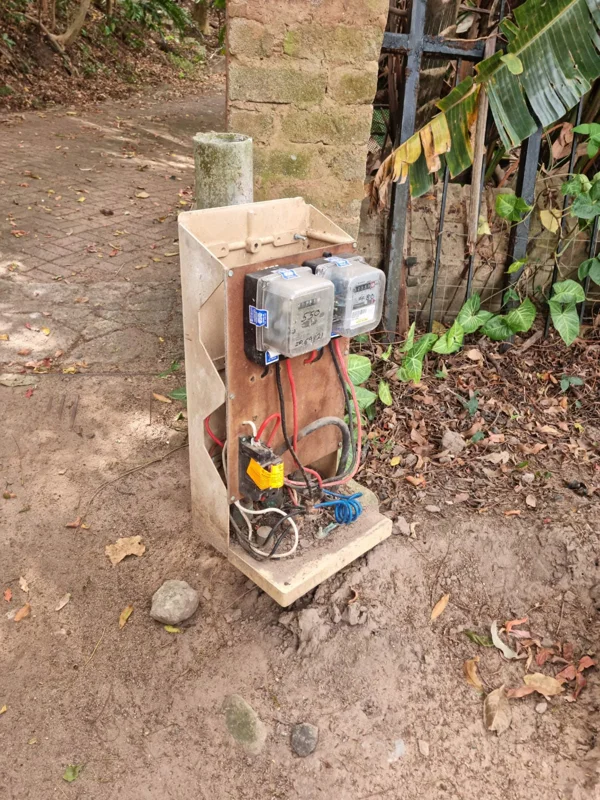
Older electromechanical meters — the kind that remained standard infrastructure across South Africa for decades — were built around a simple model. The utility supplies power. The customer consumes it. The meter counts the units flowing in one direction and produces a number that becomes your bill. That model was accurate, reliable, and sufficient for the energy reality of its era. It assumed, correctly for most of the 20th century, that no residential property was generating its own electricity.
Solar changed that assumption entirely. A home with panels and a hybrid inverter can, under the right conditions, generate more electricity than it consumes — and the surplus has to go somewhere. In a grid-tied system without a zero-export configuration, that surplus flows back toward the grid through the same meter that was designed only to measure inward flow.
The Reverse Meter Problem
Older electromechanical meters can physically run backward during export conditions. When a solar system pushes power out toward the grid, the spinning disc inside the meter reverses — effectively subtracting from the recorded consumption figure rather than adding to it. In a properly managed net-metering arrangement with a bidirectional meter, this is intentional and correct. On an older meter that was never designed or approved for bidirectional measurement, it creates a billing record that is difficult or impossible to interpret accurately after the fact.
The South African solar installation boom during the load shedding crisis of 2022–2024 meant that hundreds of thousands of hybrid systems were connected to infrastructure that had not been upgraded to handle them. Many homeowners — myself included — installed systems before fully understanding how their specific meter configuration would interact with export conditions. Some installers configured systems in zero-export mode from the outset. Many did not, either because the customer did not request it, because the inverter configuration was not optimised, or because the installer was not focused on that detail. The result, across a large number of properties, is a billing history that contains inaccuracies that neither the homeowner nor the utility can cleanly reconstruct.
Why Billing Disputes Become So Complex
Once a billing anomaly appears — an unexpectedly high account, an inconsistent reading sequence, a sudden estimate that bears no relationship to the previous pattern — reconstructing what actually happened becomes genuinely difficult. The questions that need to be answered are straightforward, but the answers rarely are: which readings were actual and which were estimated? How was export energy treated in historical invoices? Was the meter physically running backward during periods of export? Were those reversed readings simply accepted as consumption reductions, or were they treated as credits, or were they ignored entirely?
Without a detailed audit trail of meter readings, inverter telemetry, and billing records, answering those questions requires assumptions — and disputes built on assumptions tend to compound rather than resolve. I spent months attempting to reconcile conflicting meter readings against historical invoices and my own SolarmanPV telemetry data, submitting photographs of the physical meter, written reconciliation requests, and formal escalations. The complexity was not manufactured by either party. It was a direct consequence of connecting modern solar technology to legacy metering infrastructure that was never designed for it.
The Estimated Billing Compounding Problem
Estimated billing makes this significantly worse. When Eskom estimates a reading during a period where solar export is occurring, any inaccuracy in that estimate is compounded into future billing cycles. A single estimated reading that is wrong by 100 units becomes wrong by 300 units after three months of compounding on the wrong baseline. By the time an actual reading is taken, the variance between the estimate and reality can be large enough to generate a corrective invoice that looks, from the customer's perspective, like an error rather than a reconciliation.
This is precisely the kind of situation that is extremely difficult to challenge without meticulous documentation. If you cannot show what your meter actually read on each of the dates when Eskom estimated, and cannot cross-reference those dates against your inverter's export records, you are essentially arguing against a number with a story rather than a counter-number with evidence.
What Solar Owners with Grid Connections Should Do Right Now
If you have a hybrid solar system connected to an older Eskom meter — particularly a pre-smart-meter installation on a residential supply — there are several concrete steps worth taking immediately, not when a problem arises.
Photograph your meter monthly, on the same date each month, with the date visible in the frame or captured in the file metadata. Record the meter number, the reading displayed, and any visible indicators of meter behaviour. Store these photographs somewhere you will still have access to in two years — not just on your phone. This creates an independent audit trail that the utility's estimated readings cannot override.
Understand your inverter's export configuration. Check with your installer or your inverter's monitoring application whether your system is configured for zero export, limited export, or unrestricted export. If you are on an older meter and your system is configured to export freely, you should be aware that this creates the conditions for the metering confusion described above. Discuss with your installer whether your configuration is appropriate for your meter type and municipal requirements — regulations on this vary between municipalities and are covered in more detail in our article on net metering and feed-in tariffs in South Africa.
Use your inverter's telemetry independently. Applications like SolarmanPV provide a detailed record of what your system produced, consumed, and exported on any given day. This data can be invaluable in a billing dispute — but only if you have been logging it consistently. Start now if you have not.
Raise anomalies immediately and in writing. The longer a billing discrepancy continues, the harder it becomes to reconstruct. If a reading looks wrong, query it in writing at the first opportunity, request an actual read rather than an estimate, and keep a copy of everything. Understanding your rights under South African consumer protection law and the regulatory framework that governs solar installations is also worth the time before a dispute arises rather than during one.
The Bigger Picture
South Africa's rapid residential solar adoption has exposed an uncomfortable infrastructure reality. The metering systems that underpin the country's electricity billing were designed for a centralised, one-directional energy model. Distributed residential generation — which is exactly what solar represents at scale — introduces bidirectional flows, variable export, and complex consumption patterns that older infrastructure handles poorly or not at all. Utilities, regulators, installers, and homeowners are all adapting to this simultaneously, and the transition is creating friction in the billing layer that will take years to fully resolve as metering infrastructure is modernised.
For individual homeowners, the practical implication is that documentation, configuration awareness, and early dispute escalation are no longer optional extras. They are essential risk management for anyone operating a solar system on a legacy-metered supply. The technology has outpaced the infrastructure, and until that gap closes, the responsibility for managing the consequences falls largely on the consumer.
This article documents one homeowner's experience with legacy metering and solar billing and is intended for general informational purposes. It does not constitute legal advice. If you are involved in an active billing dispute with a utility, consult a qualified legal professional. For regulatory guidance on solar installations and metering requirements, see our articles on NERSA registration and municipal grid-tie approvals.